Animal otherness
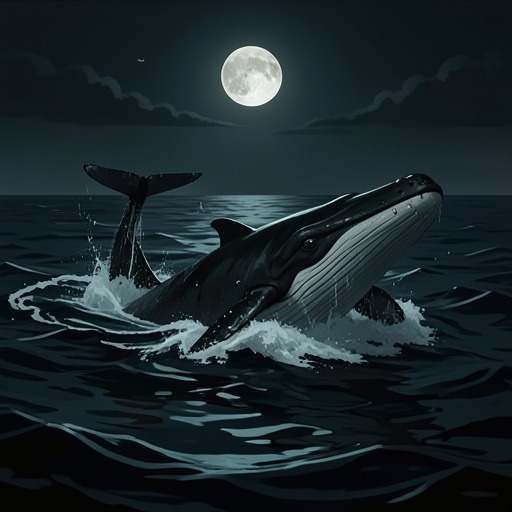
The WhaleAnimal otherness names a refusal to treat animals as lesser humans, passive scenery, or resources whose meaning is exhausted by human knowledge. In the book, whales are powerful, vulnerable beings with their own capacities and ways of inhabiting the world. Their difference is not a gap to be corrected: it exposes the limits of the human perspective and places people and animals within a shared, precarious life.
Beyond the human measure
Henry Beston’s account supplies the clearest formulation of this idea: animals are not to be measured by man. They are neither human kin in a simple sense nor subordinate beings awaiting human interpretation. Beston instead describes them as other nations, caught with people in the net of life and time. The image grants animals a collective existence that does not depend on human recognition. Their senses may extend beyond those humans possess, and their lives may be conducted through voices people cannot hear.
That principle changes how the book’s whale imagery works. A whale can evoke human concerns, but it is not reducible to a symbol for them. The animals remain creatures with bodies, capacities, and needs of their own. The text’s comparisons—to clouds, countries, and Leviathan—make them imaginable while also marking the inadequacy of any single human description. Their size and strangeness invite metaphor; their independent presence resists being used up by it.
Bodies with their own agency
Stormy Mayo’s close encounters with Right whales make animal otherness physical and immediate. He speaks of the prehistoric vision of the animals and sunlight glinting through their baleen, but his account is not merely contemplative: these are strong, flexible creatures that know their power. The Right whale can sweep its tail between its eyes, making an approach from the side impossible or dangerous. Its body is not passive matter in a human drama. It can set the terms of an encounter, and a person near it must reckon with those terms.
The danger becomes sharper in Stormy’s rescue work. Video clips show an entangled whale twisting and thrashing its tail with force enough to send a boat into the air. On one occasion, a fishing hook snagged on Stormy’s lifejacket as the whale dived. He had only seconds to cut himself free; once in the water, the line’s pull could drag his arm back and make using his knife impossible. The scene recalls Ahab tethered to Moby Dick, but the likeness does not make the whale a literary monster. It reveals a material relation in which the whale’s movement, the line, the human body, and the boat exert force on one another. The animal is dangerous not because the narrative proves it malicious, but because its panic and strength have consequences beyond human control.
Stormy’s description of Right whales as wicked sits beside his reluctance to find the label intelligent useful. That tension resists easy classification. Calling an animal intelligent can still make human standards the measure; calling it wicked acknowledges its power but risks translating difference into moral accusation. The book preserves the unease rather than resolving it. The whales are neither docile grazing creatures nor villains: they are formidable animals whose actions cannot be safely assimilated to human expectations.
Knowledge and its limits
The contrast with Thomas Beale’s writing on the Sperm whale shows that correcting human error does not mean mastering the animal. Beale rejects a claim by Cuvier that Sperm whales terrorize other sea creatures, describing them instead as timid and inoffensive and prone to flee from anything unusual. His firsthand knowledge matters because it unsettles a confident but inaccurate picture of the whale as a tyrant of the deep. The example also complicates any general claim about whale temperament: the book’s accounts concern different animals and circumstances, not a single character assigned to every whale.
Beale’s work ranges across the animal’s anatomy, habits, feeding, and the development of the Sperm whale fishery. Yet information, however extensive, does not abolish the distance between observer and creature. The whale remains elusive even after facts and measurements have accumulated; Beale’s examination of the skeleton at Burton Constable offers another kind of access, not final possession of the animal’s reality. The bones disclose physical structure, but the living whale cannot be made wholly present by description, dissection, or taxonomy. Knowledge corrects particular falsehoods while encountering a limit it cannot simply overcome.
Shared worlds, unequal costs
The book’s image of whales as countries extends otherness from individual bodies to communities and habitats. Barnacles and sea-lice travel on whale bodies like inhabitants of wandering territories, while the animals themselves move through a world shared with humans but not organized around human purposes. Hobbes’s Leviathan, formed as a figure of the Commonwealth or State, sharpens the political irony: whales can be imagined as sovereign, almost invincible powers and still remain vulnerable to attack. Their size does not protect them from being plundered.
That vulnerability is especially stark in the images of entanglement shown by Stormy’s colleague Scott Landry. Nylon line cuts into whale flesh until it grows over the cord even as the wound bleeds; whale lice colonize weakened tissue. A dead whale on a beach becomes visibly less recognizable as a creature, though its eye still appears to stare and weep. These injuries are not signs that the animals have failed by some human measure. They show the cost imposed on beings caught in the by-products of human activity, made subjects of its consequences rather than participants in its benefits.
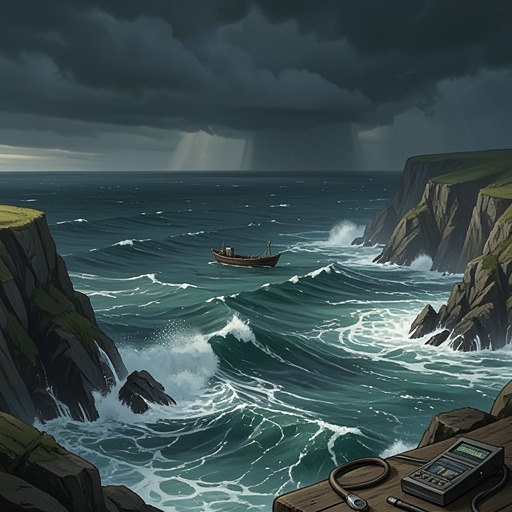
The research vessel Shearwater measures zooplankton in the bay to assess whether the feeding ground can sustain whales. A count above 3,750 organisms per cubic metre may indicate enough oil-rich copepods and other tiny animals to support the population; if the count falls short, a whale arriving there may find too little food and move on. This close attention to minute organisms does not diminish the leviathan. It makes visible the network of conditions on which its life depends. Animal otherness therefore does not mean that humans and whales occupy separate worlds: they share a world whose relations people can study but whose inhabitants cannot be reduced to human categories, needs, or control.